This is the decision most people spend the longest on, and it's usually framed as a price question when it's really a maintenance question. Pressure-treated vs composite decking comes down to whether you'd rather pay less now and do work every couple of years, or pay more now and do almost nothing. Both answers are defensible. Neither one is objectively correct. What muddies the decision is that the comparison usually gets made on material price alone, which leaves out the part that actually differs: what you do with the deck after it's built. There's also a third factor people skip entirely, which is that the framing underneath doesn't change either way. You can put composite boards on a rotting frame and have a beautiful surface on an unsafe structure. This article compares the two honestly across cost, upkeep, and how Connecticut weather treats each, and then covers the part that stays the same regardless.
What Each One Actually Costs Over Time
Pressure-treated lumber costs meaningfully less at purchase. That gap is the main reason it stays the most common decking material. Composite runs higher up front, sometimes considerably, depending on the line. Where the math changes is over ten or fifteen years. Pressure-treated needs cleaning and sealing on a regular cycle, and if you hire that out, the cost accumulates. It also gets board replacements, since individual pieces cup, split, or rot faster than the frame does. Composite avoids most of that. The honest summary is that pressure-treated is cheaper to build and more expensive to own, and composite is the reverse. Which one wins depends entirely on how long you plan to keep the house.
Maintenance: Sealing Versus Washing
Pressure-treated wood needs to be cleaned and sealed periodically or it grays, checks, and eventually starts holding water in the surface cracks. That's a real weekend of work, or a real invoice if someone else does it. Skipping it doesn't destroy the deck immediately, but it shortens the life of the boards considerably. Composite needs washing. That's genuinely most of it. It can stain, and some products scratch, and none of that is the same category of work as stripping and resealing a wood surface. If the honest answer is that you're not going to seal a deck every two or three years, that's useful information and it should drive the decision rather than being ignored.
How Connecticut Weather Treats Both
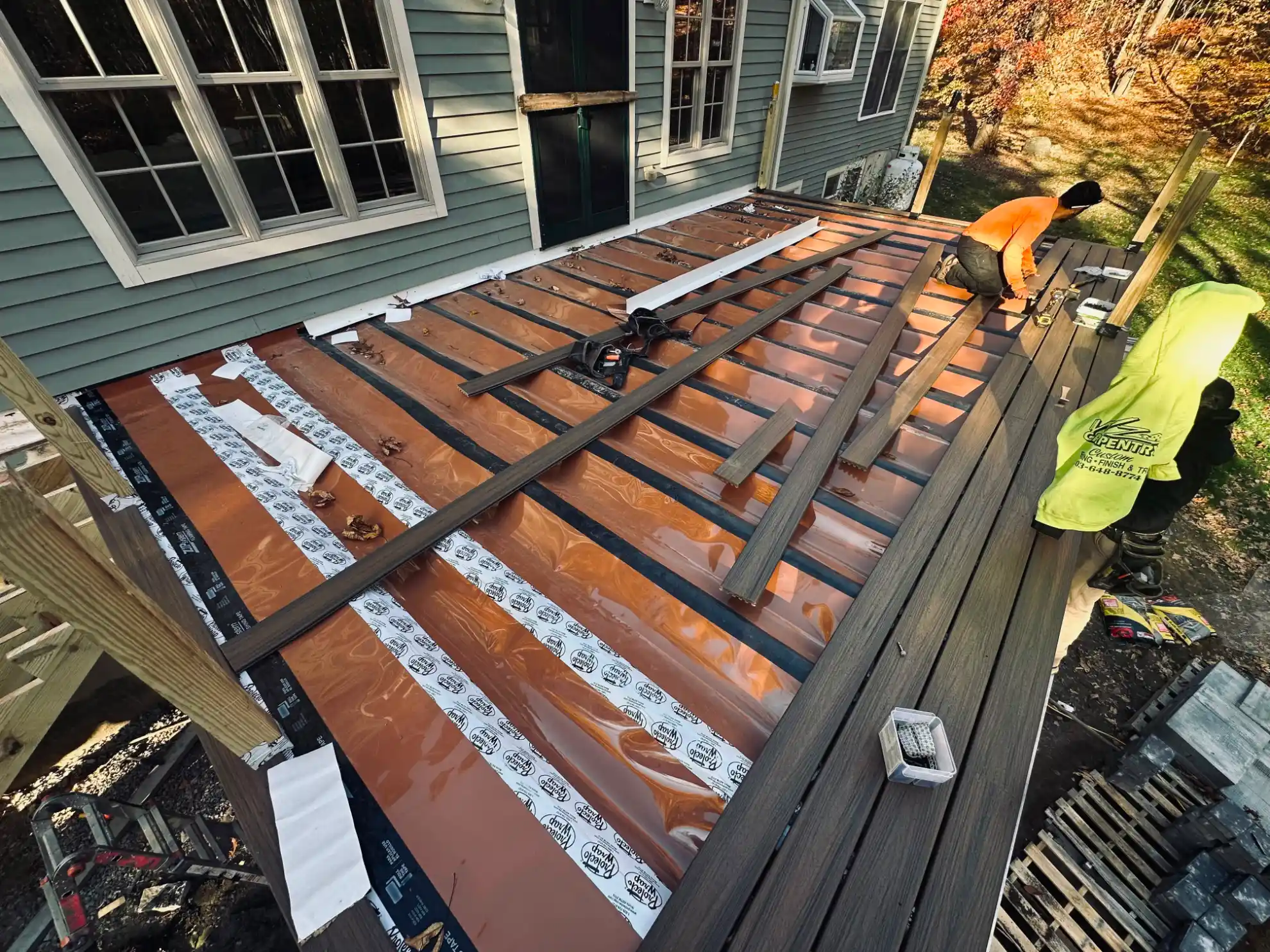
Connecticut puts a deck through freeze and thaw, snow load, road salt tracked in on boots, and a humid summer. Pressure-treated wood absorbs and releases moisture through all of that, which is what causes cupping and checking over time. Boards that were flat in year one develop a crown that holds water in year eight. Composite is dimensionally more stable through the same cycle. It does get hot in direct summer sun, noticeably more than wood on a south-facing deck with no shade. Neither material fails in Connecticut. They just age differently, and the aging is more visible on wood because wood moves.

The Part That Doesn't Change Either Way
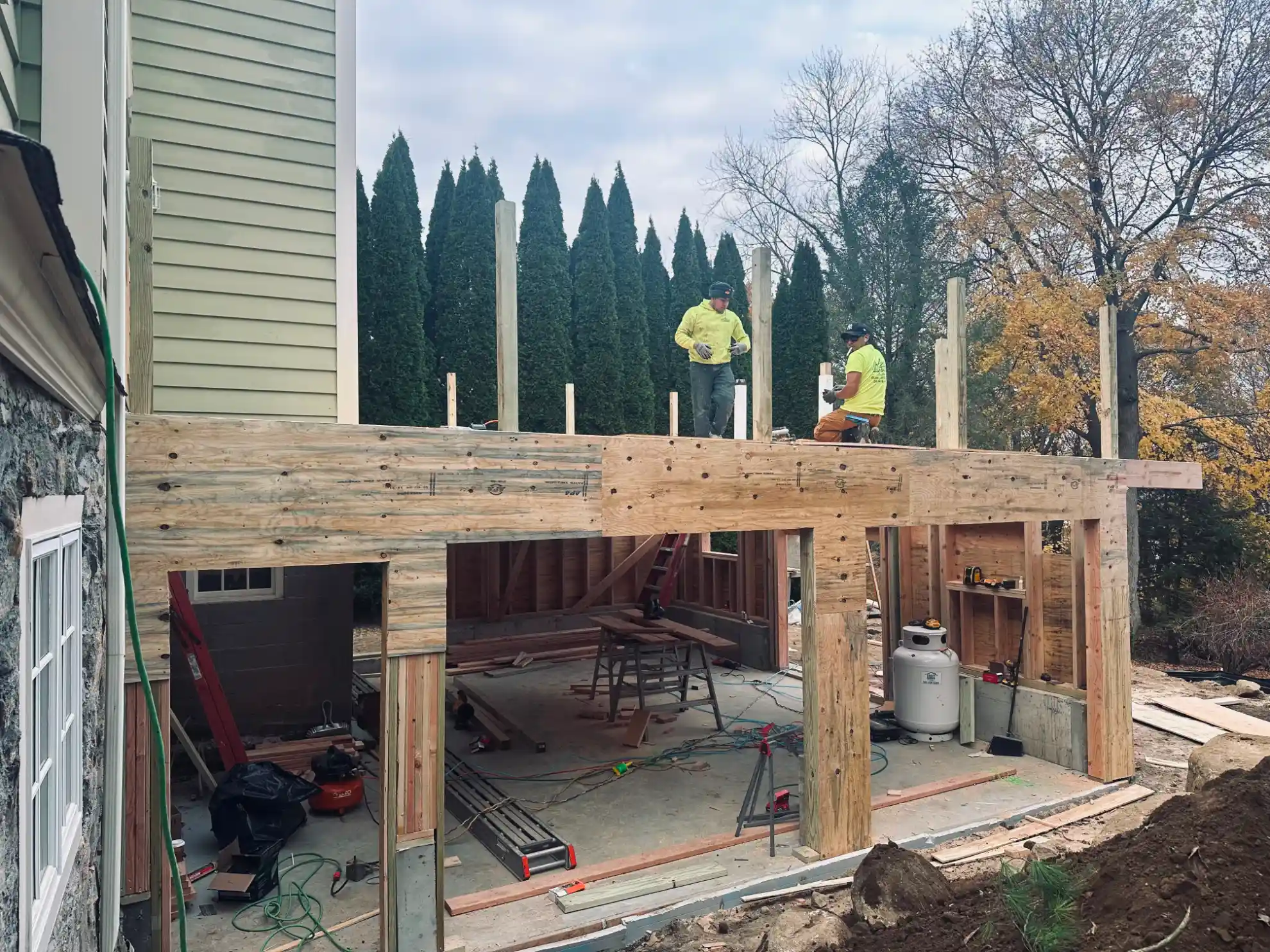
Underneath both surfaces is the same pressure-treated frame. Posts, beams, joists, and the ledger connection to the house are identical regardless of what goes on top. That framing is what determines whether the deck is safe and how long it lasts, and it's the part nobody photographs. A composite surface on a deck with heaved footings or a poorly flashed ledger is an expensive floor on a failing structure. Before choosing a surface material, it's worth having someone check what's holding it up. On a rebuild, that's most of the actual work. On a resurfacing job, it's the thing that decides whether resurfacing is even the right move.